Repair · Thymosin β-4 Fragment
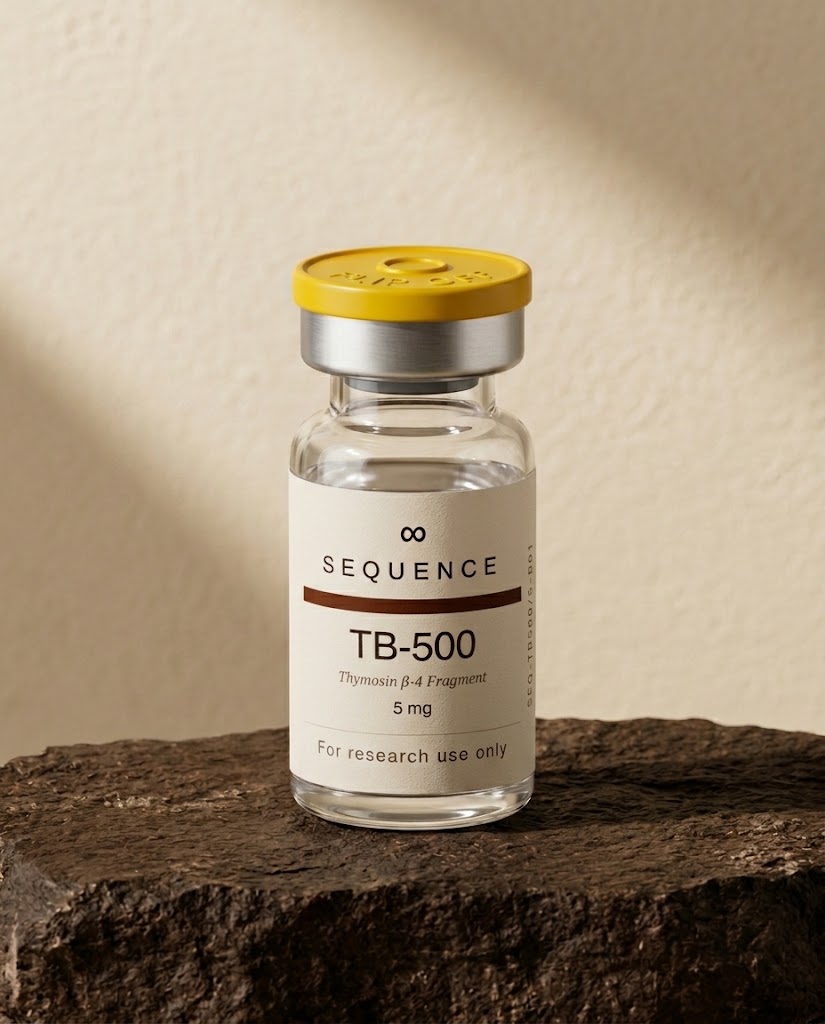
TB-500 5MG
A synthetic fragment of Thymosin β-4 — supports actin remodelling, stem-cell recruitment, and soft-tissue regeneration.
39,00 €
5 mg vial
In stock
Per reference50units
Cadence2× per week
Dose2.5mg
Vial5mg / 1 mL
About
A synthetic peptide fragment derived from Thymosin β-4, a naturally occurring protein involved in tissue repair.
Research describes TB-500 as acting on actin cytoskeleton remodelling, stem-cell recruitment, and angiogenesis. Literature notes effects on muscle, tendon, ligament, and skin regeneration - often used alongside BPC-157 as a complementary repair signal.
Sequence lists TB-500 under the Repair category - tissue, gut, injury.
Vial content
5 mg lyophilised TB-500 in an glass vial, reconstituted with bacteriostatic water.
At reference, 50 units on a U-50 insulin syringe draws approximately 2.5 mg. Rotate between abdominal quadrants, outer thighs, and upper arms.
Storage: refrigerated 2–8°C after reconstitution. Do not freeze.
Reported effectsWhat the literature
What the literature
describes.
Stem-cell recruitment
Angiogenesis & blood flow
Inflammation & scar modulation
Joint & flexibility support
Reported timelineWhat the literature
What the literature
reports, by phase.
Week 1–2
01
Week 1–2 — Initial reduction in soft-tissue inflammation. Early calming of chronic injury sites.
Week 3–6
02
Week 3–6 — Increased flexibility. Reported acceleration in post-training recovery.
Week 6–12
03
Week 6–12 — Consolidation of tendon and ligament repair. Sustained improvements in joint comfort.
Long-term
04
Long-term — Retention of tissue resilience through the off-phase. Often paired with BPC-157.
Reference dosing
Reference profile.
Baseline
Standard50units / injection
2.5MG · 2× per week
- Injection siteSubcutaneous · abdomen, thigh, upper arm
- RotationQuadrant cycle, avoid repeat sites
- TimingEvening preferred - aligns with nighttime repair
Recommended cycle
6-12 Weeks depending on injury
Research protocols often describe a front-loaded schedule (higher frequency for 4–6 weeks) followed by maintenance dosing. Cycling aligns with how the tissue-repair pathways respond over time.
Vial details
| Content | TB-500 · lyophilised |
| Mass | 5 mg |
| Reconstitution | 1 mL water |
| Concentration | 5 mg/mL |
| Supply (baseline) | ~1 week |
| Storage | 2–8°C · do not freeze |
Mechanism
Actin. Stem cells. Angiogenesis.
TB-500 is a synthetic fragment of Thymosin β-4, the naturally occurring peptide that regulates actin polymerisation - the cellular machinery behind cell migration and tissue repair.
Research notes three primary pathways: actin-cytoskeleton remodelling (cell migration to injury sites), stem-cell recruitment (progenitor cells reach damaged tissue), and angiogenesis (new capillaries support the repair).
- ActinRegulates actin polymerisation — cell migration to damaged tissue.
- Stem cellsSupports recruitment of progenitor cells to injury sites.
- AngiogenesisNew capillary formation at repair sites — complements BPC-157's VEGF signalling.
- InflammationModulates inflammatory response without full suppression.
Safety signalsReported side effects
Reported side effects
& contraindications.
Reported side effects
- Injection-site redness or mild discomfort
- Mild soreness or bruising at the site
- Transient fatigue during the loading phase
- Occasional head-fog during the first week
Contraindications
- Active malignancy
- Pregnancy or breastfeeding
- Known peptide or excipient hypersensitivity
Severe swelling, fever above 38°C, worsening fatigue, rash, dizziness, hives, breathing difficulty, or facial swelling - discontinue and contact a clinician.
Watch it done properly.
Reconstitution, site rotation, storage — on video.