Resolve · Triple-Agonist Complex
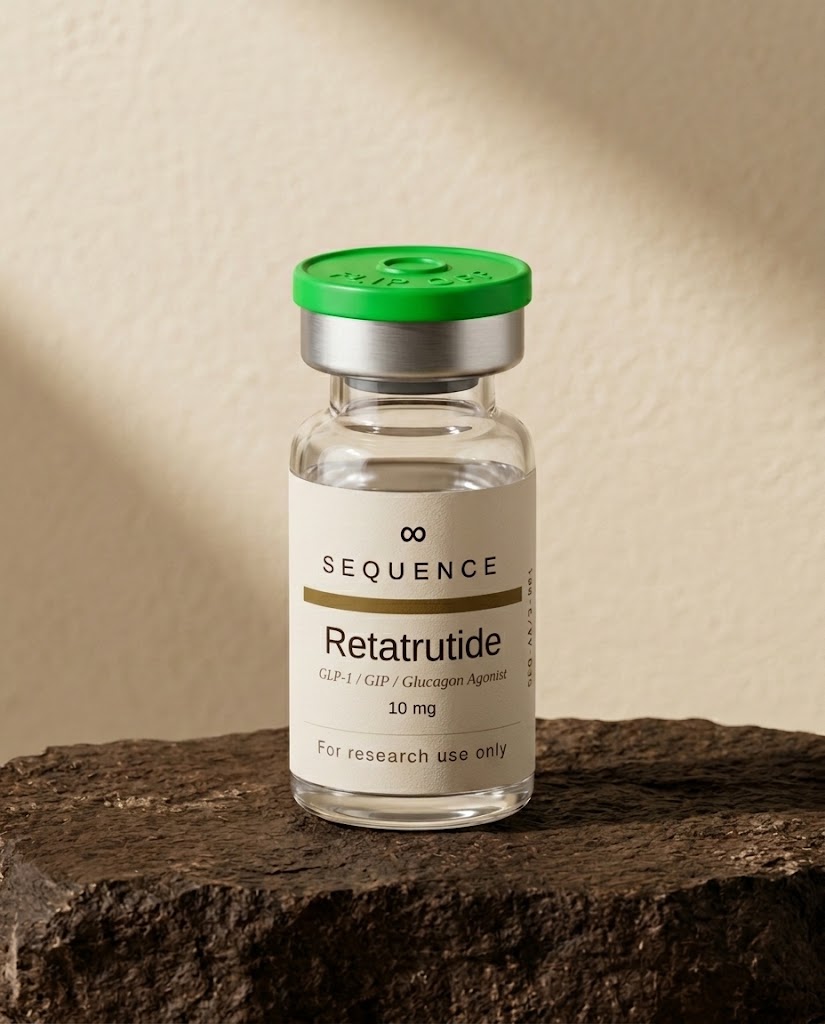
GLP-3 RT 10mg
A once-weekly triple-agonist targeting GLP-1, GIP, and glucagon receptors — extended supply window.
99,00 €
10 mg vial
In stock
Per reference20units
Cadence1× per week
ReceptorsGLP-1 / GIP / Glucagon
Vial10mg / 2 mL
About
The same triple-agonist as the 5 mg vial — at a higher mass for longer supply or escalated reference.
Research describes GLP-3 RT as activating three metabolic pathways simultaneously. GLP-1 and GIP drive insulin response and satiety; glucagon agonism uniquely elevates basal metabolic rate. The 10 mg vial suits longer cycles and escalation tiers.
Sequence lists GLP-3 RT under the Resolve category — fat loss, metabolism.
Vial content
10 mg lyophilised GLP-3 RT in an glass vial, reconstituted with 2 mL bacteriostatic water at 5 mg/mL.
At reference, 20 units on a U-50 insulin syringe draws approximately 2 mg (baseline). Rotate between abdominal quadrants.
Storage: refrigerated 2–8°C after reconstitution. Do not freeze.
Reported effectsWhat the literature
What the literature
describes.
Blood-sugar & insulin balance
Energy expenditure & oxidation
Lean-mass preservation
Appetite & metabolic regulation
Reported timelineWhat the literature
What the literature
reports, by phase.
Week 1–2
01
Week 1–2 — Reduced appetite, steadier blood sugar, lighter digestion. GI adaptation common.
Week 3–6
02
Week 3–6 — Body composition begins to register. Fat oxidation steady. Food aversion normalises.
Week 6–12
03
Week 6–12 — Visceral fat reduction consolidates. Insulin and lipid markers trend.
Long-term
04
Long-term — Metabolic rate holds at reduced body mass. Retention post-pause with adequate protein and load.
Reference dosing
Reference profile.
Baseline
Standard20units / week
1 mg · 1× per week
- Injection siteSubcutaneous · abdomen
- RotationQuadrant cycle, 7+ days
- TimingAny time of day
Baseline
Standard10units / week
1 mg · 1× per week
- Injection siteSubcutaneous · abdomen
- RotationQuadrant cycle, 7+ days
- TimingAny time of day
Unit-to-milligram conversion
| Units | Volume (mL) | Dose (mg) | Reference |
|---|---|---|---|
| 5 | 0.05 | 0.50 | Microdose |
| 10 | 0.10 | 1.00 | Baseline |
| 20 | 0.20 | 2.00 | Escalation · tier 1 |
| 30 | 0.30 | 3.00 | Escalation · tier 2 |
| 50 | 0.50 | 5.00 | Upper reference |
Recommended cycle
Up to 40 weeks in clinical trials
Cycling supports receptor sensitivity across all three pathways. The off-phase tests whether the system holds gains without continuous exogenous input.
Vial details
| Content | GLP-3 RT · lyophilised |
| Mass | 10 mg |
| Reconstitution | 2 mL BAC water |
| Concentration | 5 mg/mL |
| Supply (baseline) | ~10 weeks |
| Storage | 2–8°C · do not freeze |
Mechanism
Three receptors. One molecule.
GLP-3 RT activates GLP-1, GIP, and glucagon receptors simultaneously. GLP-1 drives glucose-dependent insulin release and satiety; GIP supports insulin sensitivity and adipose signalling; glucagon agonism raises basal metabolic rate — the mechanism that distinguishes it from dual-agonist peptides.
The triple signal produces greater calorie burn and fat oxidation than single- or dual-pathway compounds, with lean-mass preservation reported at reference doses.
- GLP-1Glucose-dependent insulin release, appetite suppression, slowed gastric emptying.
- GIPInsulin sensitivity, adipose signalling, co-potentiation of GLP-1.
- GlucagonRaises basal metabolic rate — calorie burn without appetite cost.
- Half-lifeWeekly cadence enabled by albumin-bound side chain.
Safety signalsReported side effects
Reported side effects
& contraindications.
Reported side effects
- Mild nausea or constipation during initial weeks
- Decreased appetite or early satiety
- Occasional fatigue as body adjusts
- Vomiting or delayed gastric emptying (rare)
Contraindications
- Active malignancy — especially medullary thyroid carcinoma, MEN 2
- Pregnancy or breastfeeding
- Known peptide or excipient hypersensitivity
- History of pancreatitis
- Severe gastroparesis or GI motility disorders
Severe abdominal pain, persistent vomiting, allergic reaction, visual disturbance, or signs of pancreatitis — discontinue and seek immediate medical evaluation.
Watch it done properly.
Reconstitution, site rotation, storage — on video.